
Vegas Rio casino Plinko game
Introduction: what Vegas rio casino Plinko actually offers
Plinko looks almost too simple to deserve a serious breakdown. You choose a stake, set the risk level, drop a ball, and watch it bounce through a field of pins until it lands in a multiplier slot. That is the entire visual idea. But in practice, Vegas rio casino Plinko is one of those best games information for Vegas Rio Casino players where the simplicity of the screen hides a very specific style of play: fast, statistical, and often more emotionally intense than many players expect.
I have seen the same pattern many times. A player opens Plinko thinking it is a light side game, something closer to an arcade distraction than a real gambling product. Then the session starts, the ball keeps drifting toward small returns, and suddenly the whole experience becomes about timing, variance, and the hope of hitting a rare top multiplier. This gap between appearance and actual play is exactly why Plinko deserves a proper review.
For Australian players exploring the Plinko page at Vegas rio casino, the key question is not whether the interface is easy to understand. It is. The real question is what kind of session this format creates, how the payout structure behaves over time, and whether that rhythm matches your expectations. Plinko can be engaging, but it is not automatically suitable for every player profile.
In this article, I will focus strictly on the game itself: how Plinko works, why it attracts attention, what the risk settings really change, where the pressure points are during a session, and what you should understand before placing the first drop.
What Plinko is and why it attracts so much attention
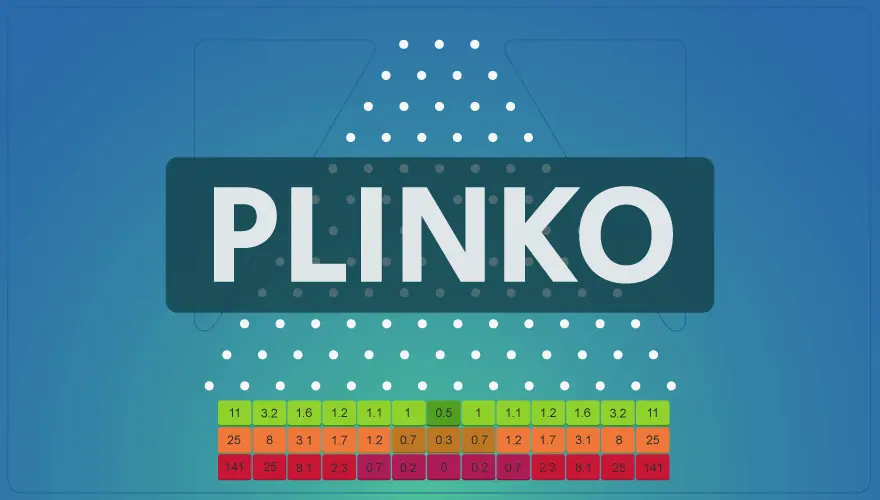
At its core, Plinko is a probability-based casino game built around a vertical board filled with pegs. A ball drops from the top, collides with pins on the way down, and eventually lands in one of several prize slots at the bottom. Each slot is tied to a multiplier. Most central slots tend to carry lower multipliers, while the outer edges often contain the highest rewards and the lowest probability of being hit.
The reason Plinko became so visible across modern gaming platforms is easy to understand. It compresses gambling into a form that is instantly readable. You do not need to learn paylines, real money bonus symbols, card values, wheel sectors, or side bets. One glance is enough to understand the visual logic. That low entry barrier matters.
But the game does not hold attention just because it is easy to read. It holds attention because every drop produces a small suspense arc. The ball is visible from start to finish. You can follow each bounce. You can imagine a better outcome while it is still in motion. That creates a very direct emotional loop: anticipation, near-miss feeling, result, repeat.
One of the most interesting things about Plinko is that it often feels more “honest” to players than a slot. Not because it is more beatable or more transparent in a mathematical sense, but because the path of the ball is shown on screen. You see movement. You see deviation. You see the outcome forming in real time, even though the result is still governed by random logic under the hood.
This is also why Plinko became a notable format for streamers and high-speed sessions. It is easy to watch, easy to narrate, and each result lands quickly. Yet that visibility can be misleading. A visible ball path does not mean a player can predict or influence where it will end.
How the Plinko mechanic works in real play
To understand Vegas rio casino Plinko, you need to separate the visual layer from the mathematical layer. Visually, the ball falls through pins and changes direction left or right after each collision. Mathematically, the game is built around a distribution of outcomes. The center of the board usually collects the largest share of results, while the extreme left and right edges represent rarer events with bigger multipliers.
In most versions of Plinko, the player controls a few core parameters:
- Stake size — the amount placed on each drop.
- Risk level — commonly low, medium, or high.
- Rows — in some versions, the number of rows can be adjusted, changing the board depth and the payout map.
These settings matter because they shape the outcome distribution. Lower risk usually compresses the multiplier table. You get more frequent modest returns, but the top prizes are smaller. Higher risk stretches the board economically: many outcomes become poor or very low, while a few edge multipliers become much larger. In other words, the game becomes less forgiving and more explosive.
The movement itself creates a false sense of pattern recognition. Players often believe a ball that starts slightly to one side, or seems to bounce “well” early, has a better chance of reaching a premium slot. In reality, each collision contributes to a probability path that is not readable in a useful player-facing way. Watching the ball is exciting, but it should not be confused with control.
A practical way to think about the mechanic is this: Plinko is not about building combinations, unlocking rounds, or waiting for a feature trigger. It is about repeated sampling from a probability curve. Every drop is a new event. The entertainment comes from how quickly that event resolves and how sharply the outcome range can vary.
| Element | What it changes | What it means for the player |
|---|---|---|
| Stake | Value of each drop | Directly affects session cost and emotional pressure |
| Risk level | Distribution of multipliers | Defines whether the session feels smoother or more extreme |
| Rows | Board depth and result spread | Can increase dispersion and alter top-end potential |
| Auto-play or rapid drops | Session speed | Can accelerate losses or flatten emotional awareness |
Why the game feels fast and why that matters during a session
Plinko has a very distinct session rhythm. It is faster than most Vegas Rio Casino roulette review with payment and login details and often more immediate than slots because there is no need to wait for reels to stop, bonus symbols to align, or a secondary round to begin. The result cycle is compact. You place the drop, the ball travels, the multiplier lands, and the next decision is already in front of you.
This speed is one of Plinko’s biggest strengths, but also one of its hidden pressure points. A fast cycle can make small losses feel harmless because each individual drop looks minor. Yet a long sequence of low multipliers can accumulate quickly, especially when the player increases the stake after missing a high-value edge slot several times.
There is a practical difference between “simple” and “light.” Plinko is simple to understand, but not always light to play. On high risk settings, the emotional swing can become sharp. You may see many underwhelming results before one notable hit appears. For some players, that creates tension and focus. For others, it becomes repetitive frustration.
One observation I find important: Plinko often feels slower emotionally than it is technically. The ball’s visible path gives your brain a short suspense window, so each result feels like an event. But if you run repeated drops, the session can burn through a bankroll much faster than that suspense suggests. This mismatch catches players off guard.
Risk levels, probabilities, and what they mean beyond the interface
Risk settings are the real engine of the Plinko experience. They do far more than add a label to the screen. They determine how often you are likely to see low, medium, or high multipliers, and that changes not just the payout profile but the entire mood of the session.
On a low-risk setting, the board usually offers a tighter multiplier range. Returns tend to cluster around modest values, and the session can feel steadier. This does not mean the player is safe from losses. It simply means the path to losses is often less abrupt and less dependent on a rare spike.
On a medium setting, the board starts to open up. You may still see a reasonable number of middling outcomes, but the distance between ordinary and strong results becomes more noticeable. This is often the point where Plinko begins to feel strategically tempting, even though the player is not making strategic decisions in the classic sense. The temptation comes from believing the balance between frequency and upside is “just right.”
On a high-risk setting, the structure becomes much more severe. The premium multipliers can look attractive, but the path toward them is statistically narrow. A player can go through long stretches where the board returns little value compared with the total staked. This is where Plinko stops feeling like a casual drop-based game and starts behaving more like a sharp-variance product.
It helps to keep the probability logic in plain language:
- The center of the board is usually where results land most often.
- The outer edges usually hold the biggest multipliers and the rarest outcomes.
- Higher risk does not improve your chance to land premium results; it mostly changes how much the board pays when those rare outcomes happen.
That last point is especially important. Many players treat high risk as if it “unlocks” a better version of Plinko. It does not. It simply creates a more uneven return profile.
Who Plinko suits and who may not enjoy it for long
In my view, Vegasrio casino Plinko is best suited to players who enjoy short decision loops, visible randomness, and direct result feedback. If you like seeing the entire event happen on screen and you prefer a format where each round resolves in seconds, Plinko can feel refreshingly clean.
It also suits players who are comfortable with variance and do not need narrative progression. There are no story-like bonus rounds here, no symbol collection, no free spins ladder. The appeal is statistical and visual rather than thematic. You are not building toward a cinematic payoff. You are repeatedly testing a distribution.
On the other hand, Plinko may disappoint players who want layered features or a stronger sense of agency. If you enjoy choosing hold cards in video poker, reading dealer tendencies in real money game selection inside Vegas Rio Casino, or waiting for feature triggers in slots, Plinko can feel too stripped down. After the initial novelty, some players realise that every session is built around the same essential action.
It may also be a poor fit for players who react strongly to near misses. Plinko generates a lot of “almost” moments visually. The ball can drift toward a premium edge and bounce away at the last second. If that kind of sequence makes you chase outcomes emotionally, the format can become uncomfortable very quickly.
What to understand about session rhythm, streaks, and potential outcomes
One of the biggest mistakes players make with Plinko is reading short-term sequences as meaningful patterns. A run of central landings does not mean an edge hit is due. A recent high multiplier does not mean the board has “cooled down.” Each drop is its own event, and the visible motion should not be mistaken for memory in the system.
That said, session rhythm still matters in a practical sense. Not because it predicts future results, but because it affects player behaviour. A long flat stretch can tempt a player to raise the stake. A sudden large multiplier can encourage overconfidence. A quick recovery after losses can create the illusion that aggressive play is working.
I would summarise the real session logic like this:
- Short sessions can feel highly random and emotionally exaggerated.
- Longer sessions reveal the repetitive nature of the format more clearly.
- Faster play increases bankroll exposure without improving decision quality.
- Higher risk settings can produce memorable hits, but also extended low-return stretches.
A memorable observation from repeated testing: Plinko often creates stronger emotional reactions from small multiplier differences than slots do from symbol differences. A ball landing one slot away from a top edge result can feel more dramatic than missing a bonus symbol on a reel. The screen design turns tiny statistical gaps into visible emotional moments.
Another useful observation is that the game can feel fair and unfair within the same minute. Fair, because the structure is easy to see. Unfair, because the edge multipliers look so close while remaining statistically uncommon. This tension is part of the game’s appeal, but it is also why expectations need to stay grounded.
How Plinko differs from slots and other casino games
Plinko is often grouped loosely with slots because it is digital, quick, and luck-driven. But the player experience is very different. A slot is built around reel outcomes, paylines, symbols, and often feature layers that influence long-term engagement. Plinko strips almost all of that away and focuses on a single event: the fall.
Compared with classic slots, Plinko offers:
- less visual clutter and fewer moving parts;
- faster interpretation of each result;
- more obvious exposure to variance through risk settings;
- less thematic immersion and less feature depth.
Compared with roulette, Plinko shares the appeal of a quick independent result, but the visual psychology is different. Roulette gives a fixed wheel and a known betting map. Plinko gives a moving object and a feeling of unfolding chance. That visual journey changes how players emotionally process the outcome.
Compared with crash-style products, Plinko is less about timing a Vegas Rio Casino withdrawals with terms and limits and more about accepting a predefined result. There is no moment of intervention once the drop begins. That removes one layer of decision-making but also removes one source of player error.
Compared with table games like blackjack or baccarat, Plinko is far less analytical. There is no hand reading, no basic strategy, no banker-player structure. The attraction lies in immediacy, not in tactical nuance.
| Format | Main appeal | What Plinko does differently |
|---|---|---|
| Classic slots | Features, themes, bonus rounds | Offers a cleaner, faster, more stripped-back loop |
| Roulette | Clear bet map and wheel outcome | Adds visible bounce-path suspense |
| Crash games | Cashout timing and nerve | Removes timing decisions after launch |
| Blackjack | Decision-making and structure | Replaces tactical choices with pure drop-based randomness |
Practical strengths and limitations of Vegas rio casino Plinko
The strongest side of Plinko is clarity. Within seconds, a player knows what is happening, what the objective is, and where the big multipliers sit. This makes the format accessible without making it childish. It also helps experienced players evaluate the session style quickly.
Another strength is pacing. If you want a game that does not bury the result under animations, intros, or multi-stage rounds, Plinko is efficient. It gets to the point. That can be a genuine advantage for players who prefer direct action over decorative presentation.
The third strength is flexibility of mood. By changing the risk level, the same board can feel conservative, balanced, or highly aggressive. That does not turn Plinko into a strategic game, but it does allow players to shape the volatility profile to some extent.
The limitations are just as real. First, repetition sets in faster than in feature-rich slots. Once the novelty of the bouncing ball fades, the format can feel mechanically narrow. Second, the visible path can encourage irrational reading of patterns. Third, high-speed play can disguise how quickly a session budget is being consumed.
There is also a more subtle limitation: Plinko can produce strong emotional spikes without giving the player any meaningful influence over them. Some people enjoy exactly that. Others find it frustrating because the game looks interactive while remaining almost entirely non-interventionist after the drop begins.
What to check before launching a Plinko session
Before starting Plinko at Vegas rio casino, I would focus on a few practical checks rather than diving in immediately.
- Look at the risk setting first. Do not treat it as a cosmetic option. It defines the shape of the session.
- Check the multiplier map. The top number is what catches the eye, but the full distribution matters more than the headline figure.
- Set a stake that fits the speed of the game. A comfortable slot stake can feel too high in Plinko because rounds resolve so quickly.
- Be careful with auto-play. Convenience can reduce awareness of how the session is actually going.
- Use demo mode if available. Not to “learn a pattern,” but to understand the emotional rhythm and result spread.
This is also where expectations need to be realistic. Plinko is not a hidden strategy product. It is a probability-driven format with a very readable surface and a potentially sharp return profile underneath. If you approach it as entertainment built on variance, it makes sense. If you approach it as something you can decode from ball movement, it becomes misleading.
A final observation worth remembering: the cleaner the interface, the easier it is to underestimate the intensity of the format. Plinko does not shout at the player. It does not need to. The pressure comes from speed, visible near misses, and the lure of rare multipliers.
Final verdict: is Vegas rio casino Plinko worth trying?
Vegas rio casino Plinko is worth trying if you want a fast, visually transparent casino game built around direct probability rather than layered features. What it really offers is not complexity, but concentration. Every drop is short, clear, and emotionally loaded in a way that many simple-looking games are not.
Its key strengths are easy to define: instant readability, quick rounds, flexible risk settings, and a style of suspense that comes from watching the full path of the ball. For players who enjoy short-form action and do not need bonus-heavy design, that can be a very strong combination.
The caution points are equally clear. Plinko can become repetitive, high-risk settings can produce long disappointing stretches, and the visible movement of the ball can tempt players into reading meaning where there is only distribution. The speed of play also deserves respect, especially for anyone who tends to increase stakes after a series of weak outcomes.
So who is it for? In my view, Plinko suits players who like clean interfaces, rapid results, and variance they can feel immediately. Who may want another format instead? Players who prefer strategic input, richer feature design, or a slower and more layered session structure.
That is the honest appeal of Plinko. It does one thing, but it does it with precision: it turns a simple drop into a compact test of probability, patience, and expectation. If that sounds appealing, the game has real value. If you want depth through decision-making rather than through variance, you will likely feel the limits of the format quite quickly.
FAQ
How does the Plinko ball drop work in the game?
A ball is released from the top and bounces through pegs until it lands in one of the numbered outcome slots. Each slot has an associated multiplier, so the final landing determines the result of the round.
What is the difference between demo mode and real-money play for Plinko?
Demo mode lets players practice the feel of Plinko without risking funds. Real-money play runs with live balance and real stakes, and the multiplier outcomes apply directly to the session results.
How is Plinko different from other casino games like slots or live casino tables?
Plinko is built around a single ball-drop mechanic where a final slot determines the multiplier. Slots rely on reel combinations, while live casino games are driven by dealer rounds and player decisions. Because Plinko is fast, it is often used for short, focused sessions rather than extended strategy.